
Salon Furniture Quality Control: How Manufacturers Ensure Excellence in Production
This professional guide explores the rigorous quality control protocols in salon furniture manufacturing. It details how premium standards are maintained through raw material validation, precision engineering of hydraulic systems, and in-process inspections. Ideal for buyers, the article highlights the importance of durability and safety in ensuring long-term ROI for salon equipment.
Selecting a salon furniture supplier is a strategic decision that hinges on one critical factor: consistent quality. For business owners and distributors, the durability and safety of styling chairs or shampoo stations directly impact long-term ROI and brand reputation. In this guide, we explore the rigorous quality control protocols that define world-class salon furniture manufacturing and ensure every piece meets international standards.
The Pillars of Quality Control in Salon Equipment Manufacturing
Quality control (QC) in salon furniture production is not a final step; it is a continuous process that begins long before the first component is assembled. A professional manufacturer implements a multi-layered inspection strategy to mitigate risks such as hydraulic failure, material degradation, or ergonomic flaws.
1. Raw Material Inspection and Source Validation
The foundation of a premium salon chair lies in its "skeleton" and "skin." High-end manufacturers conduct stringent testing on:
- Acoustic and Structural Integrity: Testing the gauge of stainless steel and the density of plywood frames to ensure they can support heavy loads over years of use.
- Upholstery Durability: Using Martindale abrasion tests on PU leather to ensure it resists cracking, chemical spills, and constant friction.
- High-Density Foam: Verifying that the cushioning maintains its shape and "rebound" properties, preventing the unsightly sagging common in budget-grade furniture.
2. Precision Engineering and Component Testing
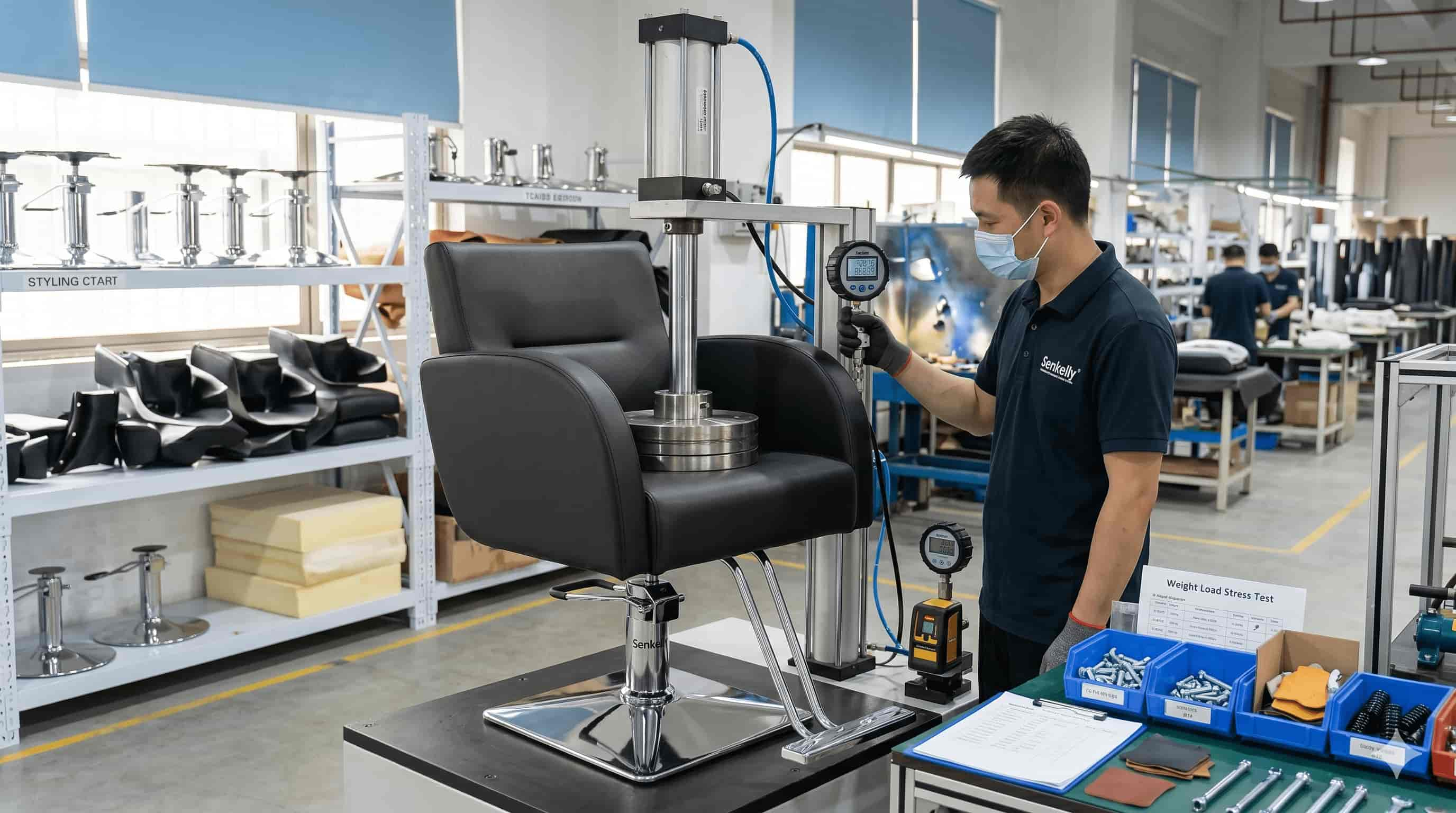
Salon furniture relies heavily on moving parts. Quality control teams focus intensely on hydraulic pumps and reclining mechanisms. A standard QC protocol involves "cycle testing," where a pump is operated thousands of times under weight to simulate years of salon activity. Any deviation in pressure or smoothness leads to the immediate rejection of the batch.
In-Process Quality Control (IPQC): Monitoring the Factory Floor
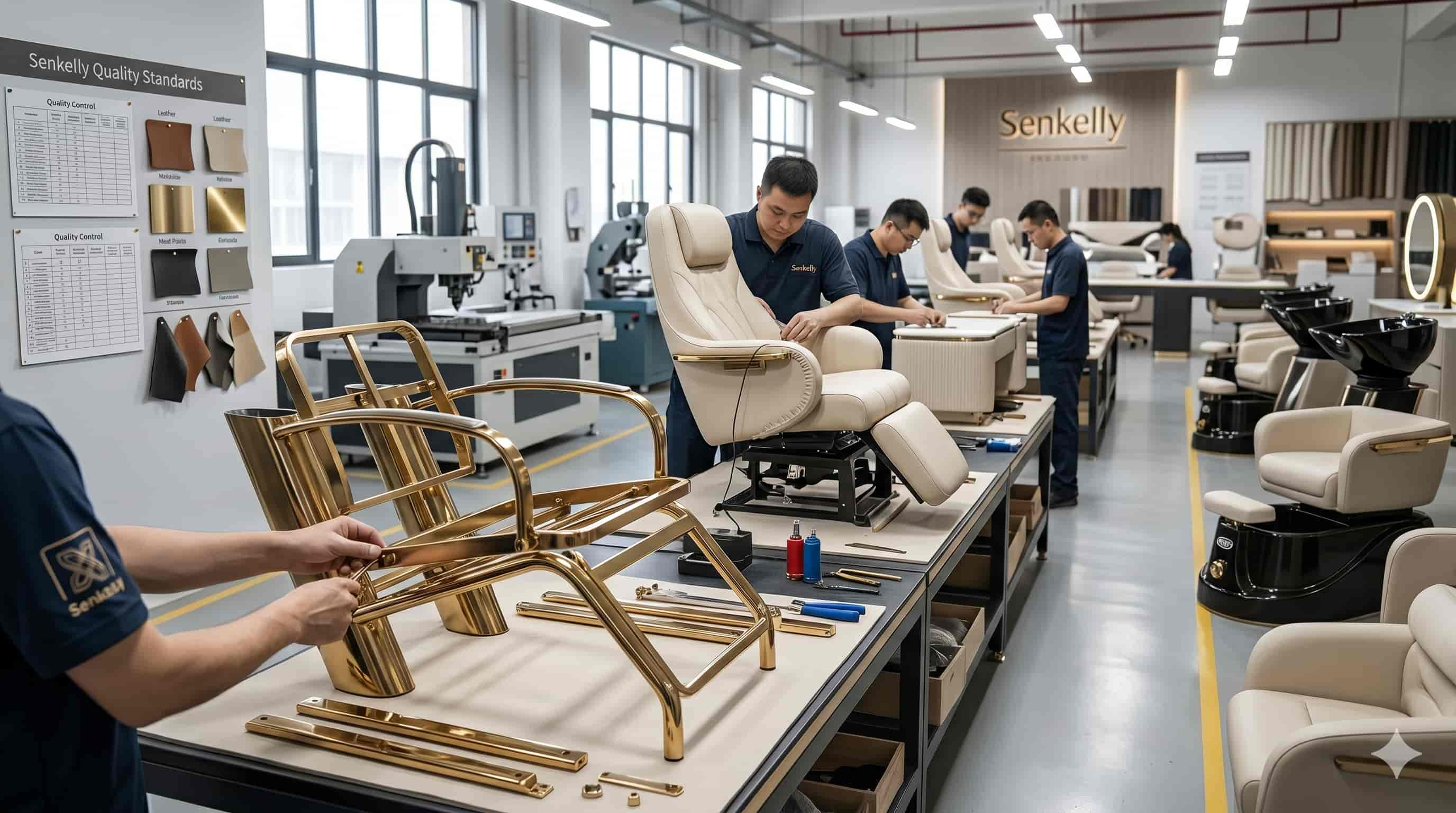
During the assembly phase, professional manufacturers like Senkelly employ IPQC specialists who monitor specific stations. This ensures that craftsmanship remains consistent across large-scale orders.
Welding and Frame Construction
For metal-based furniture, the integrity of the weld is paramount. Inspectors look for seamless joints and uniform powder coating. Poor welding not only looks unprofessional but creates structural weak points that can lead to workplace accidents in a busy salon environment.
Ergonomic Alignment
A styling chair might look perfect, but if the center of gravity is off, it becomes a safety hazard when reclined. QC engineers use precision leveling tools to ensure the base is perfectly balanced and that the rotation is fluid and silent.
The Role of Customization in Quality Management
In the sector, many clients require tailored solutions. This is where the expertise of a Salon Furniture OEM Manufacturer becomes vital. When manufacturing under OEM or ODM models, the quality control process must adapt to specific client blueprints while maintaining the factory’s baseline safety standards. This dual-layer check ensures that custom aesthetic designs do not compromise the mechanical functionality of the furniture.
Advanced Testing Standards: Chemical and Stress Analysis
Modern salon environments expose furniture to harsh hair dyes, bleaches, and cleaning agents. Therefore, a comprehensive QC program includes:
- Chemical Resistance Testing: Swabbing upholstery samples with common salon chemicals to ensure no discoloration or surface erosion occurs.
- Salt Spray Testing: For chrome or metallic finishes, this test simulates high-humidity environments to guarantee the furniture will not rust or corrode in coastal regions or damp shampoo areas.
- Weight Load Stress Tests: Applying static and dynamic loads that exceed standard human weight to ensure the hydraulic systems and bases offer a significant safety margin.
Final Quality Assurance (FQA) and Pre-Shipment Inspection
The final stage of the production line is the most rigorous. Before any item is packed, it undergoes a comprehensive Final Quality Assurance (FQA) check.
Visual and Functional Audit
Every piece of furniture is subjected to a "white glove" inspection. Technicians check for:
- Stitching Perfection: Ensuring no loose threads or uneven seams in the upholstery.
- Functional Smoothness: Testing every lever, foot pedal, and adjustment knob to ensure they operate without resistance.
- Finish Uniformity: Checking for any scratches, bubbles in the paint, or imperfections in the chrome plating.
Packaging and Logistics Safety
Quality control extends to how the product is shipped. Manufacturers use drop-testing on packaged boxes to ensure that the internal bracing and foam protection can withstand the rigors of international transit. For a global brand like Senkelly, ensuring that a shampoo chair arrives in New York or London in the same condition it left the factory in China is a hallmark of professional logistics management.
Why Professional Quality Control Matters for Your Business
Investing in salon furniture with documented quality control processes offers several long-term advantages for wholesalers and salon owners:
- Reduced Maintenance Costs: High-quality components fail less often, saving you from expensive repairs or replacement parts.
- Enhanced Client Safety: Sturdy bases and reliable hydraulics prevent injuries, protecting you from potential liability.
- Brand Perception: Clients associate the comfort and stability of your furniture with the quality of your services.
- Sustainability: Furniture that lasts ten years instead of two reduces environmental waste and improves your total cost of ownership.
Conclusion
Excellence in salon furniture production is the result of meticulous planning and an uncompromising attitude toward manufacturing standards. From the initial sourcing of high-grade steel to the final stress-testing of a hydraulic pump, every step in the quality control chain is designed to provide peace of mind to the end-user. By choosing a manufacturer that prioritizes these rigorous protocols, you ensure that your investment is not just a purchase, but a durable asset for your business growth.
FAQ
What are the most critical components to check during salon furniture quality control?
The most critical components are the hydraulic pumps, structural frames, and upholstery durability. Rigorous cycle testing on hydraulics and abrasion testing on PU leather ensure the furniture can withstand heavy daily use in a professional salon environment.
How does a professional manufacturer ensure the safety of styling chairs?
Manufacturers ensure safety by conducting weight-load stress tests and center-of-gravity balancing. This prevents the chairs from tipping over when fully reclined and guarantees that the hydraulic system remains stable under various weights.
Why is chemical resistance testing important for salon furniture?
Salon furniture is frequently exposed to hair dyes, bleaches, and cleaners. Chemical resistance testing ensures that the materials won't corrode, stain, or degrade when they come into contact with these harsh substances, preserving the furniture's appearance and longevity.
- The Pillars of Quality Control in Salon Equipment Manufacturing
- 1. Raw Material Inspection and Source Validation
- 2. Precision Engineering and Component Testing
- In-Process Quality Control (IPQC): Monitoring the Factory Floor
- Welding and Frame Construction
- Ergonomic Alignment
- The Role of Customization in Quality Management
- Advanced Testing Standards: Chemical and Stress Analysis
- Final Quality Assurance (FQA) and Pre-Shipment Inspection
- Visual and Functional Audit
- Packaging and Logistics Safety
- Why Professional Quality Control Matters for Your Business
- Conclusion
- FAQ

Styling Chair 8135

Hair Wash Station 2398

Electrical Barber Chair 8085

Hair washing bed 2378

Hair Wash Station 2392-B





Discuss Your Project with Expert Salon Furniture Manufacturers
Tell us what you need — we’ll get back to you with a fast quote and personalized OEM/ODM support.