
Types of Salon Furniture & How to Choose the Right Equipment: A Comprehensive Guide
This comprehensive guide provides an expert deep-dive into the essential types of salon furniture, from ergonomic styling chairs to advanced pedicure stations. Designed for salon owners and investors, the article outlines critical selection criteria such as durability, spatial optimization, and stylist ergonomics. It further highlights the strategic benefits of partnering with professional manufacturers for OEM/ODM customization to enhance brand identity and operational efficiency.
In the competitive beauty and wellness industry, the physical environment of your salon is more than just a workspace; it is a direct reflection of your brand identity and a critical factor in client retention. Selecting the right salon furniture is a strategic investment that balances aesthetics, ergonomics, and long-term durability.
1. Essential Salon Furniture Types
To build a high-functioning salon, you must categorize your furniture needs based on the services provided and the client journey.
Styling Chairs and Stations
The styling chair is the centerpiece of any hair salon. These chairs must feature high-quality hydraulic pumps for height adjustment and 360-degree rotation.
- Ergonomic Design: Look for high-density foam padding and lumbar support to keep clients comfortable during long coloring or styling sessions.
- Material Choice: Premium PU leather is the industry standard for its resistance to chemicals and ease of cleaning.
Shampoo Units and Backwash Systems
The shampoo area is where clients transition into relaxation.
- Side-wash vs. Back-wash: Back-wash units are generally more ergonomic for the stylist, while tilting bowls accommodate clients of different heights, preventing neck strain.
- Plumbing Integration: Ensure the units are compatible with your floor or wall plumbing configurations to avoid costly renovations.
Pedicure Chairs and Manicure Tables
For nail technicians, precision is key.
- Pedicure Thrones: Modern units often include pipe-less whirlpool systems for superior hygiene and built-in massage functions for a luxury experience.
- Manicure Stations: Look for tables with integrated dust collectors and ample storage for polishes and tools to keep the workspace organized.
Esthetician Beds and Massage Tables
In spa environments, stability is paramount. Multi-functional electric beds allow for seamless transitions between facials, waxing, and body treatments, ensuring the technician can work at the correct height without physical fatigue.
2. The Art of Selection: Key Factors to Consider
Choosing furniture is not merely about picking a style from a catalog. It requires a deep dive into the operational needs of your specific business.
Durability and Build Quality
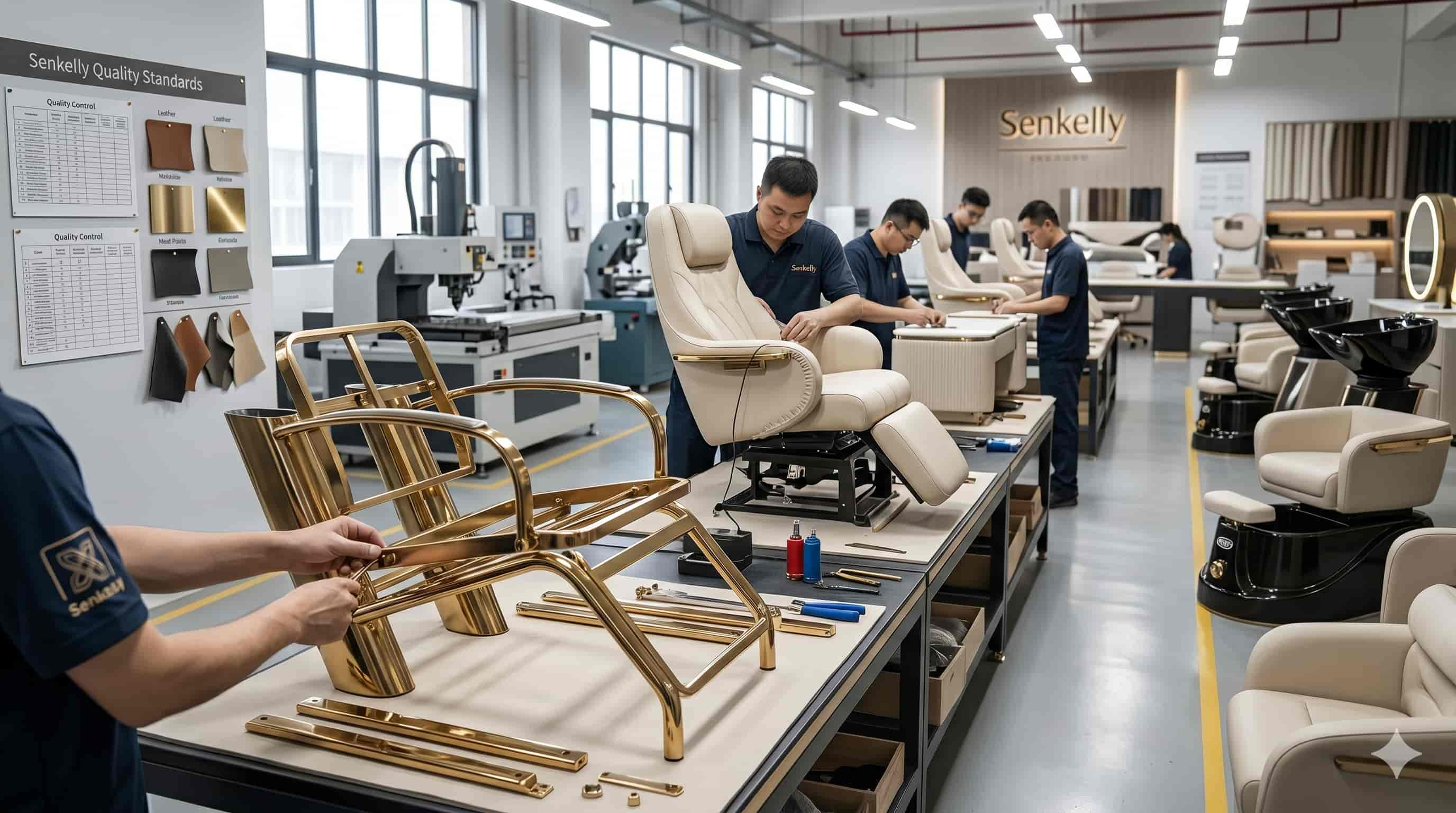
Commercial-grade furniture is vastly different from residential pieces. Salon equipment faces constant exposure to water, hair dyes, heat from styling tools, and high-frequency use. Investing in a reputable Salon Furniture Manufacturer ensures that the internal frames are made of reinforced metal or solid wood, and the hydraulic systems are tested for thousands of cycles.
Space Optimization and Layout
Before purchasing, map out your floor plan.
- Flow of Traffic: Ensure there is enough space (typically 3–5 feet) between styling stations to allow stylists to move freely.
- Visual Balance: Overcrowding a small space with bulky furniture can make the salon feel cramped and stressful. Opt for "floating" stations or mirrors with slim profiles if your square footage is limited.
Client Demographics
Consider who your clients are. If you cater to a high-end, elderly clientele, prioritize chairs with sturdy armrests and low entry heights. If your salon is a trendy, urban spot for younger demographics, bold colors and industrial designs might be more appropriate.
3. Balancing Aesthetics with Functionality
Your furniture defines your salon’s "vibe." However, a beautiful chair that is difficult to clean is a liability.
- Consistency in Design: Whether your theme is Minimalist, Vintage, or Ultra-Modern, maintain a consistent color palette across all furniture types.
- Maintenance Requirements: Darker upholstery hides stains better than lighter shades, but high-quality finishes can make even white furniture viable if they are "color-resistant."
- Stylist Ergonomics: Often overlooked, the health of your staff depends on the furniture. Stools with proper wheels and adjustable heights prevent chronic back and shoulder pain for stylists and technicians.
4. Technical Specifications to Watch For
When reviewing product sheets from a manufacturer, pay attention to these technical details:
- Weight Capacity: Standard styling chairs should support at least 350–400 lbs to accommodate all clients safely.
- Base Stability: Round or square heavy-duty metal bases provide more stability than star-shaped bases for heavy reclining chairs.
- Warranty Terms: A confident manufacturer will offer a multi-year warranty on hydraulic pumps and structural components.
5. Why Customization Matters: The OEM/ODM Advantage
In a saturated market, "off-the-shelf" furniture might not fit your specific branding or spatial constraints. This is where partnering with a manufacturer that offers OEM (Original Equipment Manufacturer) and ODM (Original Design Manufacturer) services becomes a game-changer.
Customization allows you to:
- Integrate your logo into the upholstery.
- Modify dimensions to fit unique architectural niches.
- Select specific materials that align with your eco-friendly or luxury brand pillars.
By sourcing directly from a specialist, you bypass the limitations of retail inventory and gain furniture that is literally built for your business success.
Final Thoughts: Investing in Your Future
The furniture you choose today will dictate the operational efficiency and client satisfaction levels of your salon for the next five to ten years. By prioritizing high-quality materials, ergonomic designs, and a cohesive aesthetic, you create an environment where professionals can thrive and clients feel pampered.
Remember, the goal is to find a balance where the equipment works for you, not against you. High-quality salon furniture isn't an expense; it’s the foundation of your professional reputation.
Pro Tip: Always request material samples (swatches) before a bulk order to ensure the texture and color match your vision under your salon's specific lighting conditions.
About Senkelly: As a leading global provider, Senkelly specializes in high-end salon solutions. For deeper insights into how professional manufacturing processes can benefit your business, explore our guide on Salon Furniture Manufacturer capabilities and innovations.
- 1. Essential Salon Furniture Types
- Styling Chairs and Stations
- Shampoo Units and Backwash Systems
- Pedicure Chairs and Manicure Tables
- Esthetician Beds and Massage Tables
- 2. The Art of Selection: Key Factors to Consider
- Durability and Build Quality
- Space Optimization and Layout
- Client Demographics
- 3. Balancing Aesthetics with Functionality
- 4. Technical Specifications to Watch For
- 5. Why Customization Matters: The OEM/ODM Advantage
- Final Thoughts: Investing in Your Future

Styling Chair 8135

Hair Wash Station 2398

Electrical Barber Chair 8085

Hair washing bed 2378

Hair Wash Station 2392-B





Discuss Your Project with Expert Salon Furniture Manufacturers
Tell us what you need — we’ll get back to you with a fast quote and personalized OEM/ODM support.